
Motion in One Dimension
A system with one degree of freedom moves in one dimension. The most general Lagrangian for such a system (with time-independent external conditions) is:
where
Solving via Energy Conservation
For one-dimensional systems, we can solve the motion without ever writing down the equation of motion explicitly. The key insight is that energy is conserved:
This is a powerful simplification. Lagrange’s equation would give us a second-order ODE, requiring two integrations. But energy conservation already provides one integral, reducing the problem to a first-order ODE:
This can be separated and integrated directly:
The general solution of a second-order equation contains two arbitrary constants. Here they appear as:
- The total energy
- The integration constant (which determines when the particle is at a given position)
Allowed Regions and Turning Points
Since kinetic energy
This has a simple graphical interpretation. Consider a potential energy curve like the one below:
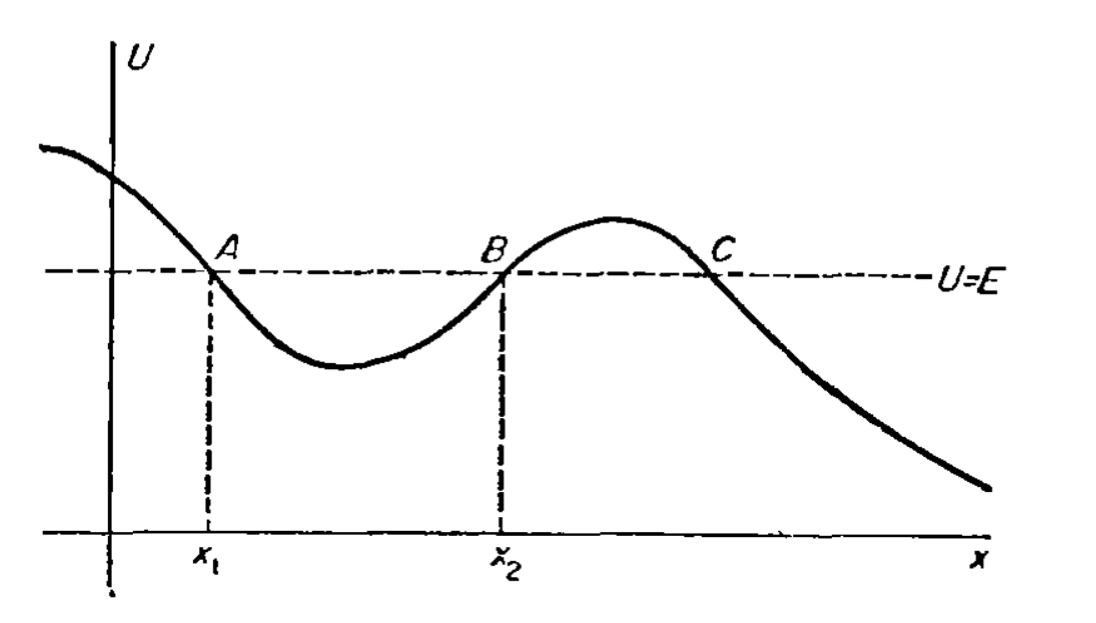
Figure 3.1: Example potential energy function
. (Landau & Lifšic, 1976).
Draw a horizontal line at height
The boundaries of these allowed regions occur where:
At these points, all energy is potential (
Finite vs. Infinite Motion
- Finite motion: The particle is trapped between two turning points and oscillates back and forth. This occurs in a potential well (like region
). - Infinite motion: The particle is bounded on at most one side and escapes to infinity (like the region right of
).
Period of Oscillation
For finite (oscillatory) motion between turning points
Using (LL11.3), the period as a function of energy is:
where
Understanding the Integral
The integrand
is large near the turning points (where ) and smaller in the middle of the well. Physically, this makes sense: the particle moves slowly near the turning points (where it reverses direction) and faster in the middle (where kinetic energy is maximum).
Determination of the Potential Energy from the Period of Oscillation
We now consider the inverse problem: given the period
Mathematically, this means solving the integral equation (LL11.5) for the unknown function
Setting Up the Problem
Assume
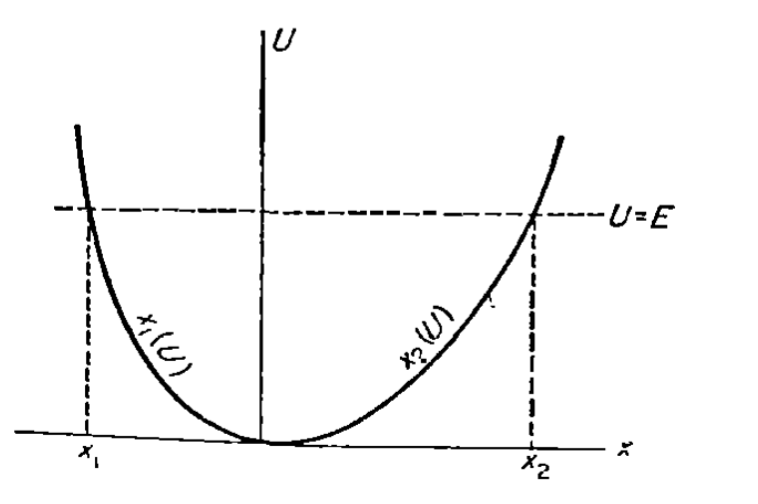
Figure 3.2: A potential well with a single minimum at
. (Landau & Lifšic, 1976).
The key idea is to invert the relationship: instead of viewing
However, this inverse is two-valued. Looking at Figure 3.2, for any given potential value
At the minimum, both branches meet:
Rewriting the Period Integral
We split the integral (LL11.5) into two parts - left side and right side of the well - and change variables from
Why the Minus Sign?
On the left branch, as
increases from to , goes from toward more negative values, so . The subtraction accounts for the opposite directions of the two branches.
This is an integral equation of Abel type. The remarkable fact is that such equations can be inverted analytically.
The Inversion Trick
The technique is to apply an integral transform that “undoes” the
Step 1: Divide both sides by
Step 2: On the right side, swap the order of integration. The region of integration is
Step 3: The inner integral over
Evaluating the Inner Integral
Substitute
. Then , and the integrand simplifies to . The limits become to , giving .
Step 4: The remaining integral over
Replacing
Interpretation and Uniqueness
Formula (LL12.1) tells us the width of the potential well at each energy level - that is, the horizontal distance
However, it does not tell us where the well is positioned. We could shift the left and right branches horizontally (in opposite directions by the same amount) without changing this width. Thus, infinitely many potentials produce the same period function
To obtain a unique solution, we need additional information. The simplest assumption is that the potential is symmetric about the minimum:
With this symmetry, (LL12.1) becomes:
This gives
The Reduced Mass
We now turn to an extremely important problem: the motion of a system of two interacting particles (the two-body problem). Remarkably, this problem can be reduced to an equivalent one-body problem by separating the center-of-mass motion from the relative motion of the particles.
The potential energy of the interaction depends only on the distance between the two particles, i.e. on the magnitude of the difference in their radius vectors. The Lagrangian of such a system is therefore
Let
Substitution in (LL13.1) gives
where
is called the reduced mass. The function (LL13.3) is formally identical with the Lagrangian of a particle of mass
Thus the problem of two interacting particles is equivalent to that of the motion of one particle in a given external field
Motion in a Central Field
On reducing the two-body problem to one of the motion of a single body, we arrive at the problem of determining the motion of a single particle in an external field such that its potential energy depends only on the distance
It is known that the angular momentum of any system relative to the center of such a field is conserved. The angular momentum of a single particle is
Thus the path of a particle in a central field lies in one plane. Using polar coordinates
This function does not involve the coordinate
In the present case, the generalized momentum
This law has a simple geometrical interpretation in the plane motion of a single particle in a central field. The expression
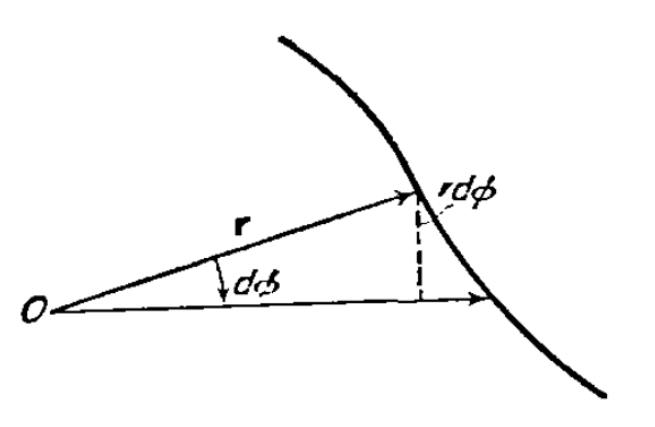
Figure 3.3: Integration over a path. (Landau & Lifšic, 1976).
Calling this area
where the time derivative
The complete solution of the problem of the motion of a particle in a central field is most simply obtained by starting from laws of conservation of energy and angular momentum, without writing out the equations of motion themselves.
Expressing
Hence
or, integrating,
Writing (LL14.2) as
Formula (LL14.6) and (LL14.7) give the general solution of the problem. The latter formula gives the relation between
Formula (LL14.6) gives the distance
The expression (LL14.4) shows that the radial part of the motion can be regarded as taking place in one dimension in a field where the “effective potential energy” is
The quantity
determine the limits of the motion as regards distance from the center. When equation (LL14.9) is satisfied, the radial velocity
If the range in which
If the range of
The condition for the path to be closed is that this angle should be a rational fraction of
Such cases are exceptional, however, and when the form of
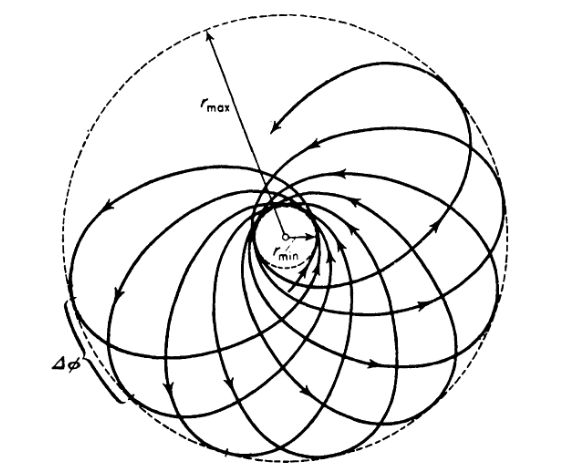
Figure 3.4: Unclosed path of a particle. (Landau & Lifšic, 1976).
There are two types of central field in which all finite motions take place in closed paths. They are those in which the potential energy of the particle varies as
At a turning point the square root in (LL14.5), and therefore the integrands in (LL14.6) and (LL14.7), change sign. If the angle
The presence of the centrifugal energy when
or
i.e.
Kepler’s Problem
An important class of central fields is formed by those in which the potential energy is inversely proportional to
Let us first consider an attractive field, where
with
is of the form shown in the following figure:
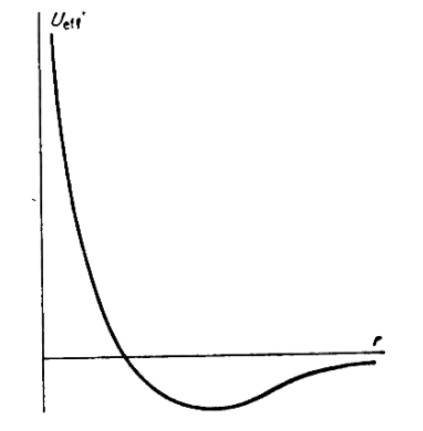
Figure 3.5: Effective potential of an attractive field. (Landau & Lifšic, 1976).
As
It is seen at once from Figure 3.5 that the motion is finite for
The shape of the path is obtained from the general formula (LL14.7). Substituting there
Taking the origin of
we can write the equation of the path as
This is the equation of a conic section with one focus at the origin.
In the equivalent problem of two particles interacting according to the law (LL15.1), the orbit of each particle is a conic section, with one focus at the center of mass of the two particles.
It is seen from (LL15.4) that, if
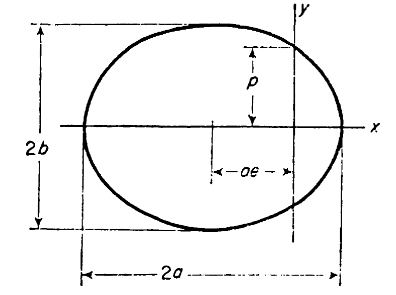
Figure 3.6: Path of mass in an attractive potential field where
. (Landau & Lifšic, 1976).
According to the formula of analytical geometry, the major and minor semi-axes of the ellipse are
The least possible value of the energy is (LL15.3), and then
These expressions, with
The period
It may be noted that the period depends only on the energy of the particle.
For
where
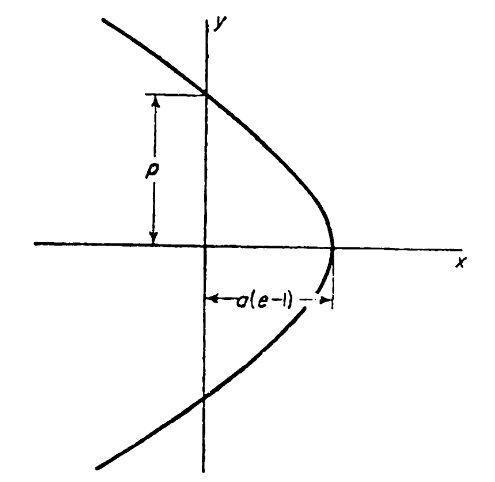
Figure 3.7: Path of mass in an attractive potential field where
. (Landau & Lifšic, 1976).
If
The coordinates of the particle as functions of time in the orbit may be found by means of the general formula (LL14.6). They may be represented in a convenient parametric form as follows.
Let us first consider elliptical orbits. With
The substitution
If time is measured in such a way that the constant is zero, we have the following parametric dependence of
the particle being at perihelion at
Stop
Stopped here. Became boring.
Exercises
Question 1
Determine the period of oscillations of a simple pendulum (mass
Solution:
Let
At the turning point
By symmetry, the period equals four times the time to swing from
Using the identity
The substitution
where
For small amplitudes (
The leading term
Question 2
A system consists of one particle of mass
Solution:
Let
Hence,
The potential energy depends only on the distances between the particles, and so can be written as a function of the
Question 3
Integrate the equations of motion for a spherical pendulum (a particle of mass
Solution:
In spherical coordinates, with the origin at the center of the sphere and the polar axis vertically downwards, the Lagrangian of the pendulum is
The coordinate
The energy is
Hence
where the effective potential energy is
For the angle
The integral (EX3.3) and (EX3.4) lead to elliptic integrals of the first and third kinds respectively.
The range of